并发栈只需要一个共享指针 top 和一条
CAS(Compare-And-Swap):push 把新节点挂到 top
前面,pop 把 top 换成
top->next。核心代码不到十行,但三个生产实现都在上面加了限制:Linux
的 llist 规定 llist_del_first
同一时刻只能有一个调用者;Boost.Lockfree 的
stack 把弹出的节点放进自己的
freelist,析构之前从不还给操作系统;Windows 的 SList
把表头做成 16 字节,里面有一个 48 位的序号。
这三处限制分别对应三个经常被混在一起的问题:
- ABA:CAS 只比较值,
top从 A 变走又变回 A 时,它看不出中间发生过什么。 - 内存回收:pop 在 CAS 之前要读
top->next,这个节点可能已经被别的线程弹出并释放。给指针加版本号能解决 ABA,解决不了这个。 - 争用:所有线程都在同一个 cache line 上做 CAS,线程越多失败越多。指数退避和消除数组都是为它设计的,但它们提升吞吐的机制并不相同。
本文逐个拆开。所有实测数字都来自同目录的
reproduce/:aba_demo.c
确定性地复现 ABA;lfstack.c
实现五种栈,用”每个压入的元素恰好弹出一次”的守恒检查验证正确性,并用
ThreadSanitizer 和 AddressSanitizer 各跑一遍;性能实验只用了
4 个逻辑 CPU,环境和口径见第五节。
一、Treiber 栈:一个指针、一次 CAS
从 System/370 的空闲链到 Treiber
用 CAS 维护 LIFO 链表的做法比”Treiber 栈”这个名字早。IBM System/370 的《Principles of Operation》(GA22-7000-6,1980 年版)附录 A 在 COMPARE AND SWAP 的示例里有一节 “Free-Pool Manipulation”,用 COMPARE DOUBLE AND SWAP(CDS)同时交换空闲链的表头指针和紧挨着它的一个计数字;IBM 1984 年的美国专利 US 4,482,956 转述这段示例时写明,这个计数值”对队列的完整性必不可少”。计数器存在的理由,就是本文第二节要讲的 ABA。
今天的文献通常把无锁栈归于 R. Kent Treiber 1986 年的 IBM Almaden 研究报告 Systems Programming: Coping with Parallelism(RJ 5118)。这份报告目前没有公开的在线副本;Hendler、Shavit 和 Yerushalmi(SPAA 2004)把它列为 Treiber 栈的出处,并说自己的节点池”类似 [Treiber] 引入的池”。后来的理论框架来自两篇论文:Herlihy 和 Wing 的线性一致性(linearizability,TOPLAS 1990)给出了”并发栈正确”的定义;Herlihy 的 Wait-Free Synchronization(TOPLAS 1991)区分了无锁(lock-free)与无等待(wait-free)两种进度保证。
push 与 pop
reproduce/lfstack.c 里 ABA
敏感的朴素版本(naive_push /
naive_pop,删掉了统计代码):
typedef struct node {
    _Atomic(struct node *) next;
    uint64_t val;
} node_t;

static _Atomic(node_t *) top;

void push(node_t *n) {
    node_t *old = atomic_load_explicit(&top, memory_order_relaxed);
    do {
        atomic_store_explicit(&n->next, old, memory_order_relaxed);
    } while (!atomic_compare_exchange_weak_explicit(&top, &old, n,
                 memory_order_release, memory_order_relaxed));
}

node_t *pop(void) {
    node_t *old = atomic_load_explicit(&top, memory_order_acquire);
    for (;;) {
        if (!old) return NULL;
        node_t *nx = atomic_load_explicit(&old->next, memory_order_relaxed);
        if (atomic_compare_exchange_weak_explicit(&top, &old, nx,
                memory_order_acquire, memory_order_acquire))
            return old;
    }
}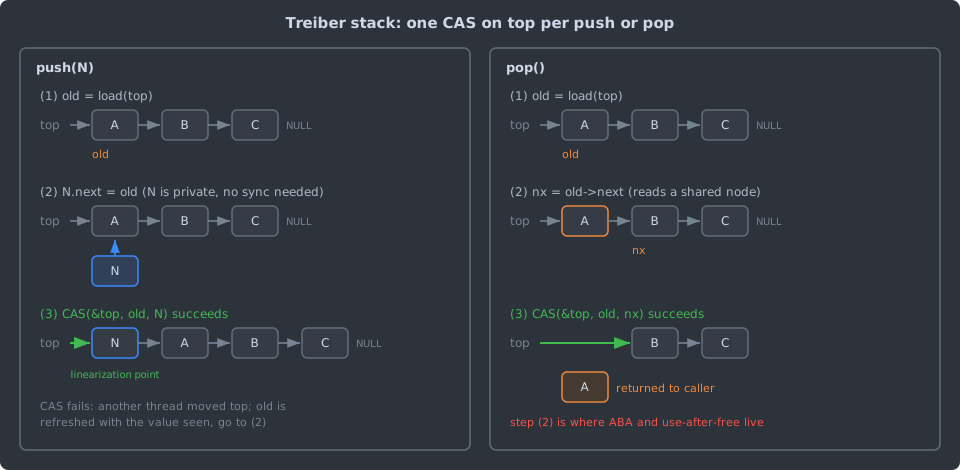
push 的第二步只写新节点 N 自己的
next,此时 N
还没有发布,其他线程看不到它。pop
的第二步不一样:它读的是共享节点 A 的
next,而在读完到 CAS 之间,A
可能已经被别的线程弹出、重用甚至释放。图中标红的那一步就是后面两节的全部麻烦所在。
compare_exchange_weak
失败时会把看到的当前值写回
old,所以循环里不需要重新
load。weak 允许伪失败(spurious failure);在
LL/SC 架构上它可以直接编译成一次 LL/SC
尝试,放在重试循环里正好。
线性化点与进度保证
线性化点(linearization
point)是操作”看起来瞬间生效”的时刻:成功的 push 和非空的
pop 都在 CAS 成功时生效;返回空的 pop 在读到
top == NULL 的那次 load 生效。
进度保证可以直接从代码读出来。top
只会被成功的 CAS 修改,所以一个线程的 CAS 失败,意味着在它读
top
之后有另一个操作完成了。于是任意时刻,只要有线程在执行,系统整体就在前进,这就是无锁的定义。它不是无等待的:没有任何机制阻止某个线程每次都输掉
CAS。第五节的实测会看到,退避会放大这种不公平。
内存序
push 先用 relaxed 写 n->next(以及
n->val),再用 release CAS 发布;pop 用
acquire 读 top,之后才读节点字段。pop 的 CAS
失败序也是 acquire,因为失败后刷新的 old
马上会被解引用。
这里有一个容易漏的细节:pop 读到的 top
往往不是 push 直接写的,而是中间若干次 push/pop 的 CAS
写的。C11 的释放序列(release sequence)规则保证:一次
release
写之后,同一原子对象上的读-改-写(read-modify-write)操作都延续它的释放序列。top
在初始化之后只被 CAS 修改,所以任何 acquire
读都能与之前每一次 release CAS 同步,pop
看得到节点被发布时写入的内容。在 x86-64 上带
lock 前缀的 cmpxchg
本身就是全屏障,这些内存序参数主要约束编译器;在 ARM、POWER
这样的弱内存模型上,它们决定生成哪些屏障。
二、ABA:CAS 只比较值
一次确定性的 ABA
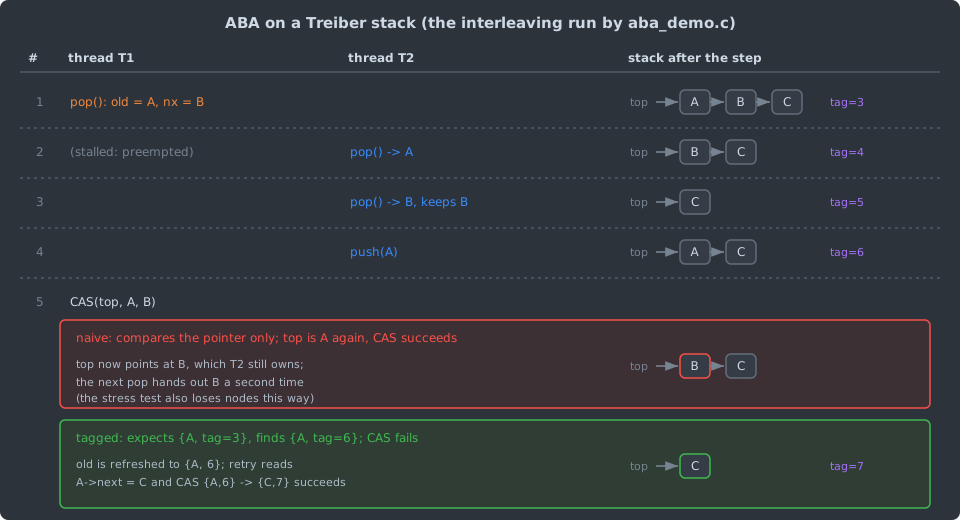
ABA 的描述通常是”线程 1 读到 A,被换出;线程 2 把 A
弹出、再压回;线程 1 的 CAS
误以为什么都没变”。reproduce/aba_demo.c
用两个信号量把这个交错固定下来:线程 T1 在 pop 里读完
old = A、nx = A->next = B
之后停下,T2 执行 pop、pop、push(A),然后放 T1 继续执行
CAS。
程序的真实输出(results/aba_demo.txt):
naive (64-bit CAS on ptr):
  initial:                     top -> A B C
  T2 popped A, popped B (still holds it), pushed A back
  after T2:                    top -> A C
  T1 pop returned A after 1 CAS attempt(s)
  final:                       top -> B C
tagged (128-bit CAS on {ptr, tag}):
  initial tag = 3
  initial:                     top -> A B C
  T2 popped A, popped B (still holds it), pushed A back
  after T2:                    top -> A C
  T1 pop returned A after 2 CAS attempt(s)
  final:                       top -> C
  final tag = 7
朴素版本里,T1 的 CAS 看到 top 仍是
A,于是把 top 设成它几步之前读到的 B。可 B
已经被 T2 弹出并持有,现在它同时在 T2 手里和栈顶上,下一次
pop 会把它再发一次。带版本号的版本里,top
的版本在 T2 的三次操作后从 3 变成 6,T1 的 CAS
失败,刷新后重读 A->next = C,第二次 CAS
成功,栈里只剩 C。这个交错不依赖时序,连续运行 1000
次输出逐字节相同。
ABA 的前提是地址被重用。只要节点从不重用(例如只 malloc
不 free,或者由垃圾回收保证仍被引用的地址不会被复用),pop
看到”还是 A”就意味着确实没变。所以 ABA
和内存回收总是一起出现:一旦允许节点复用或释放,就必须同时回答”CAS
会不会误判”和”读 A->next 时 A
还在不在”。
压力下的守恒检查
确定性演示说明问题存在,还需要知道它在真实调度下多常见。lfstack.c
的每个 push 都携带唯一值(线程号左移 40
位再加序号),弹出的值记在线程私有数组里;运行结束后把栈里剩下的元素弹空,检查器逐个核对:每个压入过的值必须恰好出现一次,不能丢(lost)、不能重复(dup)、不能出现没压入过的值(bogus),弹空时元素数也不能超过压入总数(超出说明链表成了环)。节点通过线程私有的空闲链回收,从不释放,因此这里只测
ABA,不涉及释放后使用。
4 线程、每线程 20 万次操作、push 和 pop 各占一半,换 20 个随机种子:
| 实现 | 检查失败 | 丢失元素(每次) | 重复计数(每次) | 弹空时成环 |
|---|---|---|---|---|
| naive(64 位 CAS) | 20/20 | 154819 到 176134 | 553498 到 574203 | 20/20 |
另外四种实现(mutex、tagged、backoff、elim)在本文所有运行里都通过了守恒检查,包括下面的
sanitizer 构建,以及第五、六节合计 150
次性能运行(results/*.txt 每一行末尾的
check= 字段)。
朴素版本每次都坏:80 万次操作里有十几万个元素再也没被弹出,而且每次弹空时链表都已成环(重复计数里有很大一部分是弹空阶段在环上反复读到的节点,检查器在弹出数超过压入总数时停止)。线程私有空闲链是 LIFO 的,刚弹出的节点很快就被同一线程重新压入,正好制造”同一地址回到栈顶”的条件。
这个”每次都坏”依赖机器。同一个 run.sh
在一台只有 2 个 vCPU 的 KVM 虚拟机(AMD EPYC 9754,Linux
6.8,GCC 13.3)上,4 个线程挤在 2 个 CPU 上,20
个种子全部通过守恒检查,丢失和重复都是
0(results/naive_stress_2vcpu.txt);下一小节的
TSan 构建在这台机器上对 naive
也没有报告(results/sanitize_2vcpu.txt)。ABA
要求一个线程恰好停在读 old->next 与 CAS
之间的几条指令上,而另一个线程在此期间完成至少三次操作。CPU
少于线程数时,线程主要在时间片边界被换出,落在这个窗口里的概率很低;4
个线程真正并行时,窗口每时每刻都开着。所以上面的确定性演示才是
ABA 存在的证据,压力测试通过不能说明没有 ABA。
ThreadSanitizer 抓到的是什么
同一组程序用 GCC 和 clang 的
-fsanitize=thread
各跑一遍(results/sanitize.txt):mutex、tagged、backoff、elim
四种实现都是 0 条报告且守恒检查通过;naive 有 3 到 4
条报告。这些报告不在 CAS 上,而在 n->val
的写入和空闲链指针 fnext
的写入上,是两个线程对同一节点的普通写-写竞争。
原因是 top 和 next
都是原子变量,ABA 本身不构成数据竞争(data race),TSan
没有理由报它。它报出来的是 ABA
的后果:同一个节点被两个线程同时”拥有”,于是对非原子字段的写入发生了竞争。TSan
只检测数据竞争,如果节点里的数据也全用原子访问,它就没有可报的东西了。守恒检查这类语义测试不能省。
Linux llist:用接口限制绕开 ABA
Linux 内核的 llist(Huang Ying,2010 到 2011
年)就是一个 Treiber 栈。v6.12 的
include/linux/llist.h
头部注释用一张表说明哪些操作可以不加锁并发:
 *           |   add    | del_first |  del_all
 * add       |    -     |     -     |     -
 * del_first |          |     L     |     L
 * del_all   |          |           |     -
L 表示需要锁。注释给出的原因正是
ABA:llist_del_first 依赖
list->first->next
不变,如果它在中途被抢占,另一个消费者做了
llist_del_first, llist_add, llist_add,first
可能恢复成原值而 next
已经变了。lib/llist.c 里的实现和第一节的 pop
几乎一样(v6.12,原样摘录):
struct llist_node *llist_del_first(struct llist_head *head)
{
    struct llist_node *entry, *next;

    entry = smp_load_acquire(&head->first);
    do {
        if (entry == NULL)
            return NULL;
        next = READ_ONCE(entry->next);
    } while (!try_cmpxchg(&head->first, &entry, next));

    return entry;
}
内核没有加版本号,而是限制用法:多生产者用
llist_add,消费者要么只有一个,要么用
llist_del_all。后者就是
xchg(&head->first, NULL),一次性摘走整条链,不读任何节点的
next,所以既没有
ABA,也不会碰到已释放的节点。代价是 llist
不提供通用的多消费者
pop:要逐个弹出,就只能有一个消费者,或者由调用者自己加锁。
三、版本号与双字 CAS
把计数器和指针一起比较
System/370 的 CDS 与 HSY 2004 第 2.3
节给出的是同一个办法:在 top
旁边放一个计数器,CAS
同时比较并替换两者,每次更新让计数器加一。HSY
写这篇论文时指针是 32 位的,他们指出当时的 x86 和 SPARC
都支持对对齐的 64 位块做 CAS,足够放下”指针加标签”。到了 64
位指针,同样的做法需要 128 位 CAS,x86-64 上就是
lock cmpxchg16b。lfstack.c 的 pop
一次尝试如下(tagged_try_pop,原样摘录):
static inline u128 pack(node_t *p, uint64_t tag) {
    return (u128)(uintptr_t)p | ((u128)tag << 64);
}

/* 1 = popped into *out, 0 = empty, -1 = CAS failed (retry) */
static inline int tagged_try_pop(u128 *old, node_t **out) {
    node_t *p = ptr_of(*old);
    if (!p) return 0;
    node_t *nx = atomic_load_explicit(&p->next, memory_order_relaxed);
    if (__atomic_compare_exchange_n(&S.ttop, old, pack(nx, tag_of(*old) + 1),
                                    true, __ATOMIC_ACQUIRE, __ATOMIC_ACQUIRE)) {
        *out = p;
        return 1;
    }
    return -1;
}
这里的 nx 可能是过期的:p 在读
next
之前可能已被别人弹出、重用。但只要版本号没变,就说明从读
old 到 CAS 这段时间里 top
没有被任何人改过,p
仍在栈顶,p->next
也还是它被压入时写的值。版本号一变,CAS 失败,过期的
nx 被丢掉。
计数器不必在每次更新时都加一。要让 top
回到同一个地址 A 却带着不同的 next,A
必须先被弹出、再被压入,所以只在 pop 时加一就足以识别
ABA。Michael 在 PODC 2002 的论文里也提到,Treiber 已经观察到
push 的 CAS 不受 ABA 影响。Boost.Lockfree 1.86
正是这样实现的:stack.hpp 的
link_nodes_atomic(push)用
old_tos.get_tag() 保留原标签,pop
和 consume_one 用 get_next_tag()
加一。本文的实现在 push
时也加一,只是为了让演示里的版本号变化更直观。
cmpxchg16b 的三个细节
Intel SDM 对 CMPXCHG8B/CMPXCHG16B
的描述里有三条和本文直接相关:
- 必须 16 字节对齐。操作数不在 16
字节边界上时触发
#GP(0)(64 位模式异常表)。本机上用内联汇编对偏移 8 字节的地址执行lock cmpxchg16b(reproduce/misaligned_cas.c),进程收到的是 SIGSEGV。lfstack.c用_Alignas(64)让top独占一个 cache line,也顺带满足了对齐。 - 失败也写。“To simplify the interface to
the processor’s bus, the destination operand receives a
write cycle without regard to the result of the
comparison”:比较失败时处理器把原值写回,永远不会只产生加锁读而不产生加锁写。
CMPXCHG的描述里有同样的句子。一次失败的 CAS 和成功的 CAS 一样,要把 cache line 拿到独占状态,这是第五节退避有效的硬件原因。 - 不是基础指令。它有自己的 CPUID
位(
CPUID.01H:ECX第 13 位),位为 0 时执行也是#GP(0)。编译器的默认 x86-64 目标不假设它存在:不加-mcx16时,clang 22 会警告 16 字节原子操作”超过最大无锁宽度 8 字节”并改为调用库函数。
编译器对 16 字节原子操作的处理也不一样。同一段
__atomic_compare_exchange_n(unsigned __int128 *)
代码加 -O2 -mcx16:GCC 16.1.1 生成对 libatomic
__atomic_compare_exchange_16
的调用,__atomic_is_lock_free(16, p) 返回
0;clang 22.1.6 直接内联 lock cmpxchg16b,返回
1。libatomic 在运行时按 CPUID 选择实现,本机上最终执行的仍是
cmpxchg16b;它的 16 字节 load 另有一条使用
vmovdqa 的路径,而 clang 把 16 字节 load
也内联成了 lock cmpxchg16b。单线程、每次 400
万次操作、CPU 2、5
次中位数(results/single_thread.txt):
| 构建 | naive(64 位 CAS) | tagged(128 位 CAS) |
|---|---|---|
| GCC 16.1.1 + libatomic | 105.7 Mops/s | 65.6 Mops/s |
| clang 22.1.6 内联 | 104.5 Mops/s | 57.2 Mops/s |
没有争用时,128 位版本比 64 位版本慢 38% 到 45%;clang 的内联版本反而比 GCC 的函数调用版本慢,与它把 load 也变成加锁 RMW 的反汇编结果一致,但本文没有做进一步的隔离实验。
标签放在哪里、有多宽
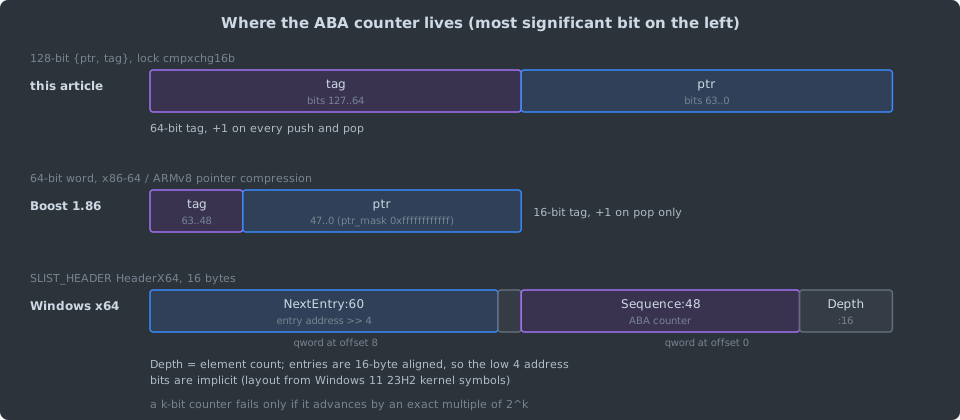
- 本文:
{ptr, tag}各 64 位,要 128 位 CAS。 - Boost.Lockfree
1.86:
detail/prefix.hpp在 x86-64 以及非 Android 的 ARMv8 上定义BOOST_LOCKFREE_PTR_COMPRESSION,改用tagged_ptr_ptrcompression.hpp:tag_t是uint16_t,放在 64 位字的最高 16 位,指针用ptr_mask = 0xffffffffffff取低 48 位,于是普通的 64 位 CAS 就够了。其他平台用tagged_ptr_dcas.hpp的双字 CAS。 - Windows x64:Windows 11 23H2
内核符号里的
_SLIST_HEADER是 16 字节,HeaderX64分为Depth:16、Sequence:48(低 8 字节)和Reserved:4、NextEntry:60(高 8 字节)。微软的驱动文档要求 64 位系统上SLIST_ENTRY16 字节对齐,所以地址的低 4 位不用存。
标签宽度决定了回绕风险。一个 \(k\) 位计数器只有在”读到
old 到执行 CAS”之间恰好前进了 \(2^k\) 的整数倍,并且
top 恰好又是同一个地址时才会误判。对 16
位标签,这要求某个线程停住的时间里栈上恰好发生 65536
的整数倍次 pop。按本机单线程约 66 Mops/s 估算,65536
次操作只要 1
毫秒左右,一个被抢占的线程完全可能停这么久,只是还需要计数和地址同时凑巧重合。48
位和 64 位计数器在任何现实的停顿时间内都不会回绕。
指针压缩还有一个前提:用户态地址不超过 48 位。Linux v6.12
的
Documentation/arch/x86/x86_64/5level-paging.rst
说明,5 级页表让用户态虚拟地址扩展到 56 位,但内核默认不在
47 位以上分配地址,除非 mmap
显式给出更高的提示地址。所以在默认配置下 Boost 的 48
位掩码仍然成立;一个自己用高地址提示 mmap
的分配器就会打破它。
LL/SC 架构(ARM 的 LDXR/STXR、POWER 的
lwarx/stwcx.)按定义在预留地址被写过之后让 SC
失败,写回相同的值也算,所以理论上不需要标签就能发现
ABA。但前提是 LL 在读 top->next 之前执行、SC
就是那次 CAS。C11 和 C++11 只暴露 CAS
接口,compare_exchange 编译出的 LL/SC 循环从
CAS 开始时才执行 LL,读 next
早在这之前就完成了,所以用标准原子操作写的 Treiber
栈在这些架构上照样需要标签或安全回收。
四、版本号不管内存回收
版本号只保证 CAS 不误判,管不了 pop 在 CAS 之前那次
p->next
读取。lfstack.c -i tagged -r free
把回收方式从”放进线程私有空闲链”改成 pop 成功后立刻
free(),其余代码不变。用
-fsanitize=address,undefined 构建、4 线程各 20
万次操作、5 个随机种子,5 次全部报告
heap-use-after-free,位置都是
tagged_try_pop 里读 p->next
的那一行(lfstack.c:129,results/sanitize.txt)。
交错很简单:线程 X 读到 old = {p, t},还没读
p->next;线程 Y 弹出 p
并释放它;X 接着读
p->next,读的是已释放的内存。X 随后的 CAS
会因为版本号变化而失败,结果不会被采用,但读本身已经是未定义行为。在真实的分配器上,如果那一页已经还给操作系统,这次读就是段错误。
要安全地释放,有三类做法:
- 类型稳定的节点池:节点只在同类对象之间复用,数据结构存活期间从不还给系统。读到过期节点只会读到过期数据,由版本号兜底。HSY
2004 第 2.3 节用的是一个”只能由执行 pop
的线程归还”的节点池;Boost.Lockfree 的
stack在类注释里写明节点被放回 freelist,“not returned to the OS before the stack is destroyed”;本文的reproduce/也用这种方式。代价是内存峰值只升不降。 - 危险指针(hazard pointers):Michael(IEEE TPDS 2004)让每个线程先公布自己将要解引用的指针,回收者扫描所有公布值后才释放。摘要里写明它只用单字读写、允许把内存还给操作系统,并且顺带给出只用单字指令的 ABA 解法:被保护的节点不会被释放,也就不会以同一地址重新出现。
- 基于纪元的回收(epoch-based reclamation):线程进入和离开临界区时登记纪元,只有所有线程都越过某个纪元之后,才释放在那个纪元被摘下的节点。读路径开销更低,但一个停住的线程会让所有回收停下来。
后两种的机制和代价分别在本系列的 Hazard Pointers 和 Epoch-Based Reclamation 两篇展开,这里只记住一个结论:ABA 和回收是两个问题。版本号解决前者,节点池、危险指针、纪元回收解决后者;危险指针恰好能同时解决两者,所以用了它的栈可以退回到单字 CAS。
五、指数退避:失败之后先等一会儿
来源
退避不是为无锁栈发明的。Anderson 的 “The Performance of Spin Lock Alternatives for Shared-Memory Multiprocessors”(IEEE TPDS 1990)在共享内存多处理器上比较了自旋锁的几种等待方式,其中之一是获取失败后按指数增长的时间退避;Agarwal 和 Cherian 同年代的 “Adaptive Backoff Synchronization Techniques”(ISCA 1989)讨论了自适应退避。HSY 2004 实验里的 “Treiber with backoff” 就是在 Treiber 栈上加了 Anderson 那种指数退避,并称它是当时已知方法中最好的。
退避对 CAS 循环有效的原因在第三节已经出现:失败的
cmpxchg 也要把 cache line
拿到独占状态。一个失败的线程如果立即重试,就会把 line
从刚刚成功的线程那里抢走,而对方下一次操作又得抢回来。让失败者等一段随机时间,line
就能在成功者那里多停留几次操作。
实现
lfstack.c 的退避只有几行:窗口从
g_bo_min 开始,每失败一次在 \([0, \text{limit})\)
里均匀取一个值,执行这么多次
pause,然后窗口翻倍,直到
g_bo_max。每次操作开始时窗口复位。
static void backoff(tstat_t *ts, unsigned *limit) {
    unsigned d = (unsigned)(xorshift(&ts->rng) % *limit);
    for (unsigned i = 0; i < d; i++) cpu_relax();   /* __builtin_ia32_pause() */
    if (*limit < g_bo_max) *limit *= 2;
}
随机数用线程私有的 xorshift,不用
rand():共享的随机数状态本身就会成为新的争用点。
实验环境与口径
| 项目 | 值 |
|---|---|
| CPU | Intel Core i9-12900K,WSL2 虚拟机内,1 个 NUMA 节点 |
| 使用的 CPU | taskset -c 2,11-13,线程 \(i\) 绑定到列表里第 \(i\) 个 CPU;单线程只用 CPU
2 |
| 拓扑 | WSL2 内 lscpu -e 报告的虚拟拓扑:CPU 2 在核
1,CPU 11 在核 5,CPU 12 和 13 是核 6 的两个超线程,即 4
线程时只有 3 个核。这颗混合架构 CPU 的哪些逻辑 CPU
落在性能核上,从虚拟机里看不出来 |
| 系统与编译器 | Linux 6.6.87.2-microsoft-standard-WSL2,GCC
16.1.1,-O2 -mcx16,链接 libatomic |
| 负载 | 每线程 100 万次操作,push/pop 各 50%(线程私有 xorshift 决定),预先压入 1024 个元素 |
| 重复 | 每个配置 5 次(种子 1 到 5),取中位数;退避窗口默认
[4, 1024] 次 pause |
| 指标 | 吞吐(总操作数 / 墙钟时间);每次操作的 top
CAS 失败次数;公平性 = 最先结束线程的耗时 /
最后结束线程的耗时 |
这台机器上同时有其他任务在跑,吞吐数字只看相对趋势;CAS 失败次数和公平性比值不受时钟精度影响,但同样受调度干扰。
结果
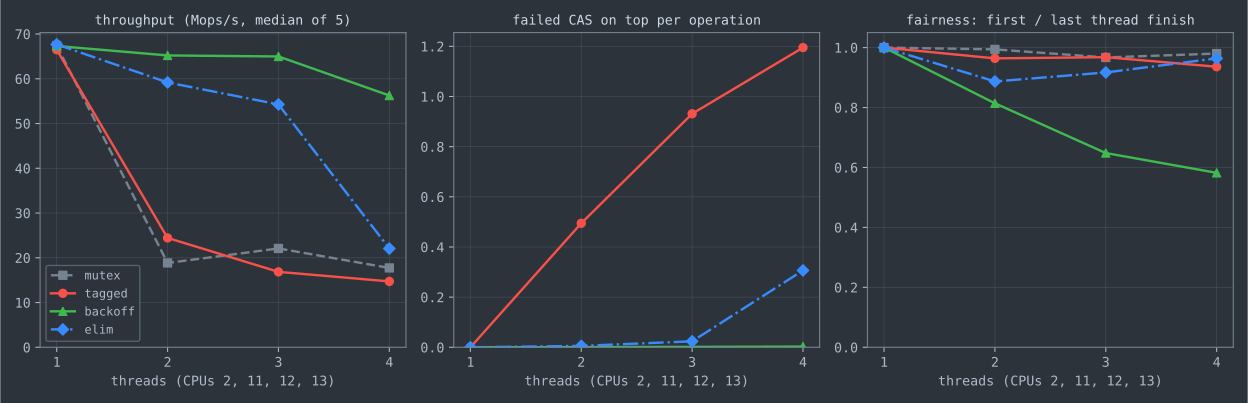
吞吐中位数(Mops/s,括号里是每次操作的 CAS
失败次数和公平性比值,数据来自
results/bench.txt):
| 线程数 | mutex | tagged | backoff | elim |
|---|---|---|---|---|
| 1 | 67.4 | 66.5 | 67.3 | 67.7 |
| 2 | 18.8 | 24.4(0.50,0.96) | 65.2(0.001,0.81) | 59.2(0.006,0.89) |
| 3 | 22.1 | 16.9(0.93,0.97) | 65.0(0.002,0.65) | 54.3(0.024,0.92) |
| 4 | 17.7 | 14.7(1.20,0.94) | 56.3(0.003,0.58) | 22.1(0.31,0.96) |
三点观察:
- 不退避的 Treiber 栈从 2 线程开始就不比锁好。单线程时四种实现都在 67 Mops/s 左右,一加第二个线程,tagged 掉到 24.4,4 线程时每次操作平均要失败 1.2 次 CAS,吞吐 14.7,略低于 mutex 的 17.7。“无锁”在这里只带来进度保证,没有带来吞吐。
- 退避把 4
线程吞吐拉回到接近单线程的水平,靠的是让一个线程连续占用
cache line。backoff 的失败率降到每千次操作 3
次,吞吐 56.3。但公平性比值从 1 降到
0.58:最先完成的线程只用了最后完成者 58%
的时间。线程总数固定、每个线程的工作量相同,完成时间差这么多,说明某些线程长时间抢不到
top。 - mutex 在 2 线程时最差(18.8),3 线程反而回升到 22.1,这个非单调现象在 5 次运行里都出现(2 线程范围 17.9 到 19.8,3 线程 21.6 到 22.3)。本文没有分析它的原因,只把它当作”锁的吞吐同样对线程放置敏感”的一个例子。
退避窗口上限的影响(4
线程,results/backoff_sweep.txt):
窗口上限(pause 次数) |
吞吐(Mops/s) | CAS 失败/操作 | 公平性 |
|---|---|---|---|
| 16 | 31.0 | 0.278 | 0.93 |
| 64 | 52.1 | 0.050 | 0.86 |
| 256 | 58.6 | 0.011 | 0.83 |
| 1024 | 58.3 | 0.003 | 0.54 |
| 4096 | 65.2 | 0.000 | 0.28 |
上限越大,失败越少、吞吐越高,公平性越差;上限 4096
时最快的线程只用了最慢线程 28%
的时间。吞吐和公平性在这里是同一个旋钮的两端。这个取舍在不同机器上的位置不同:pause
的时延随微架构变化,cache line
在核间传递的代价随拓扑变化,所以窗口参数没有可移植的”最优值”。HSY
2004 为此让每个线程根据自己的成功率局部调整参数;后来的 TS
栈论文(POPL 2015)在两台机器上分别调优 EB
栈的配置和自己的延迟参数,延迟取值随机器不同而不同(该文第 6
节与 Table 1)。
六、消除退避栈
从消除树到”把消除当退避”
消除(elimination)的观察来自 Shavit 和 Touitou 的
“Elimination Trees and the Construction of Pools and
Stacks”(SPAA 1995;Theory of Computing Systems
1997):一次 push 紧跟一次 pop,栈的状态不变。如果一对 push
和 pop 能在栈之外碰面、直接交换数据,它们就不必碰
top。消除树把多层消除数组组织成树,但按 HSY
2004
的说法,它非阻塞却不满足线性一致性,另一条路线组合漏斗(combining
funnels)线性一致却是阻塞的,两者都只在极高负载下才有优势。
Hendler、Shavit 和 Yerushalmi 的 “A Scalable Lock-free Stack Algorithm”(SPAA 2004;期刊版 JPDC 70(1),2010)只用一个消除数组,而且只把它当退避:先在中央 Treiber 栈上尝试 CAS,失败了才去数组里随机挑一个位置等待配对,配对失败再回到栈上。低负载时几乎所有操作第一次就成功,数组不参与,延迟和普通 Treiber 栈一样;高负载时失败的操作越多,配对的机会也越多。论文证明了这个结构是无锁且线性一致的:在栈上完成的操作线性化在 CAS 处,一对被消除的 push 和 pop 线性化在碰面时刻,push 排在 pop 紧前面。
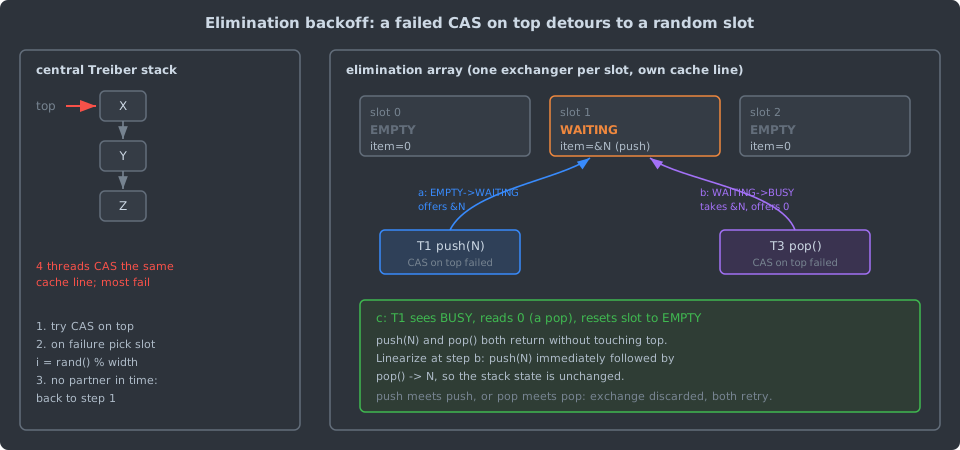
交换器
HSY 原文用两个按线程号索引的数组(location[]
和
collision[])实现碰面。reproduce/lfstack.c
采用的是 Herlihy 和 Shavit 在 The Art of Multiprocessor
Programming
里给出的简化形式:数组的每个槽位是一个交换器(exchanger),状态在
EMPTY、WAITING、BUSY 之间转换。
stateDiagram-v2
    [*] --> EMPTY
    EMPTY --> WAITING: first thread CAS, offers its item
    WAITING --> BUSY: second thread CAS, takes item, offers its own
    WAITING --> EMPTY: first thread times out, CAS withdraws offer
    BUSY --> EMPTY: first thread reads partner item, resets slot
push 提供节点指针,pop 提供 0。push 换回 0 说明遇到了
pop,操作完成;pop 换回非零值说明遇到了
push,拿到的就是那个节点。push 遇到 push、pop 遇到 pop
时交换照常发生,但双方都判定为失败,各自带着原来的东西回到栈上重试。槽位的高
64 位里除了 2
位状态还有一个序号,每次状态转换加一,用来防止槽位自身的
ABA。核心代码(exchange,删掉了注释):
for (int i = 0; i < g_elim_spins; i++) {
    u128 cur = __atomic_load_n(slot, __ATOMIC_ACQUIRE);
    uint64_t seq = ex_seq(cur);
    switch (ex_state(cur)) {
    case EX_EMPTY:
        if (__atomic_compare_exchange_n(slot, &cur, mk(mine, seq + 1, EX_WAITING),
                false, __ATOMIC_ACQ_REL, __ATOMIC_ACQUIRE)) {
            seq++;
            for (int j = 0; j < g_elim_spins; j++) {
                cur = __atomic_load_n(slot, __ATOMIC_ACQUIRE);
                if (ex_state(cur) == EX_BUSY) goto collided;
                cpu_relax();
            }
            u128 exp = mk(mine, seq, EX_WAITING);
            if (__atomic_compare_exchange_n(slot, &exp, mk(0, seq + 1, EX_EMPTY),
                    false, __ATOMIC_ACQ_REL, __ATOMIC_ACQUIRE))
                return false;
            cur = exp;
        collided:
            *theirs = ex_item(cur);
            __atomic_store_n(slot, mk(0, seq + 1, EX_EMPTY), __ATOMIC_RELEASE);
            return true;
        }
        break;
    case EX_WAITING:
        if (__atomic_compare_exchange_n(slot, &cur, mk(mine, seq, EX_BUSY),
                false, __ATOMIC_ACQ_REL, __ATOMIC_ACQUIRE)) {
            *theirs = ex_item(cur);
            return true;
        }
        break;
    default:
        break;
    }
    cpu_relax();
}
return false;
超时撤回的 CAS 失败只有一种可能:在 WAITING
状态下,只有配对方能把槽位改成 BUSY,所以 exp
里读回的一定是 BUSY 和对方的物品。BUSY
状态只由最先到达的线程复位,因此复位用普通的原子 store
就够了。被 pop 取走的节点所有权随之转移,push
一方不再碰它,这与 HSY 第 2.3 节”节点只由执行 pop
的线程归还”的约束一致。
论文里的数字与本机的数字
HSY 2004 的实验机器是 14 个 400 MHz UltraSPARC 处理器的 Sun Enterprise E6500(Solaris 9),负载是每线程 50 万次操作、push 和 pop 各半、栈预先填充到不会变空。论文报告:消除退避栈与 “Treiber with backoff” 的差距随线程数增大,32 线程时快了将近 3 倍(论文 Figure 7);被成功消除的操作比例从 2 线程的 11% 升到 32 线程的 43%(论文 Table 2)。32 线程已经超过了 14 个处理器,也就是说最高负载点是超订的。
本机的结果(第五节的表,elim
一列)方向不同。默认配置是 2 个槽位、每次等待 64 轮
pause:
- 2 线程和 3 线程时,
elim的吞吐是 59.2 和 54.3,接近 backoff;但真正通过配对完成的操作只占 0% 和 0.32%。它快,是因为 CAS 失败后在槽位上等待的那段时间起到了时间退避的作用。 - 4 线程时,配对比例升到 9.2%,吞吐却降到 22.1,远低于 backoff 的 56.3。按 WSL2 报告的拓扑,4 线程里有两个线程在同一个核的两个超线程上。
换几组参数(4
线程,results/elim_sweep.txt)能把这两种效果分开:
| 槽位数 | 等待轮数 | 吞吐(Mops/s) | 配对完成比例 | CAS 失败/操作 |
|---|---|---|---|---|
| 1 | 16 / 64 / 256 | 16.1 / 16.9 / 17.5 | 14.3% / 13.2% / 13.6% | 0.45 / 0.42 / 0.44 |
| 2 | 16 / 64 / 256 | 19.4 / 20.4 / 21.9 | 9.4% / 10.2% / 9.2% | 0.34 / 0.35 / 0.31 |
| 4 | 16 / 64 / 256 | 29.0 / 47.4 / 55.6 | 2.7% / 0.71% / 0.22% | 0.17 / 0.05 / 0.01 |
配对比例最高的配置(1 个槽位)吞吐最低;吞吐最高的配置(4 个槽位、等 256 轮)几乎不配对,只剩等待。在只有 4 个线程的时候,一个线程在槽位里等到的多半不是互补操作,而等待本身的收益与第五节的退避相同。本文的实现也没有 HSY 的自适应宽度和等待时间。所以这组数据不能用来否定论文的结论,它说明的是:消除要在失败的操作足够多时才有配对可言,4 个逻辑 CPU 离论文的 32 线程很远。
后续工作:把消除放到哪里
Dodds、Haas 和 Kirsch 的 TS 栈(“A Scalable, Correct Time-Stamped Stack”,POPL 2015)在 x86 上与 Treiber 栈和 EB 栈做了比较,机器是 4 路 10 核 Xeon 和 4 路 16 核 Opteron。他们实现 EB 栈时有一处与 HSY 相反:先访问消除数组,再访问栈,并称这样扩展性更好。TS 栈本身走得更远:每个线程把元素压进自己的单生产者池并打上时间戳,并发压入的元素之间不排序,pop 时再找最年轻的元素;论文报告它在 x86 上比 EB 栈快约 2 倍。
另一条路线是合并(combining)。Hendler、Incze、Shavit 和
Tzafrir 的 “Flat Combining and the
Synchronization-Parallelism Tradeoff”(SPAA
2010)让一个持锁线程替其他线程批量执行请求,摘要称在一个”不可忽略的并发度”以内,这种粗粒度同步比最好的细粒度实现更快,并据此构造了栈、队列和优先队列。消除减少的是对
top 的访问次数,合并减少的是争用同一 cache line
的线程个数,两者针对的是同一个瓶颈。
七、三个生产实现的取舍
| 实现(版本) | ABA 对策 | 内存回收 | 接口限制 |
|---|---|---|---|
Linux llist(v6.12) |
不处理;靠接口约束排除 | 调用者负责;llist_del_all
摘走整链后再遍历 |
llist_del_first
只允许一个消费者,否则调用者加锁;多消费者用
llist_del_all |
| Windows SList(x64) | 表头里的 48 位 Sequence 与 60 位
NextEntry 一起做 16 字节交换 |
调用者负责 | 表头与每个元素按
MEMORY_ALLOCATION_ALIGNMENT 对齐;驱动文档写明
64 位系统上二者都必须 16 字节对齐 |
Boost.Lockfree stack(1.86) |
x86-64 与 ARMv8 上 16 位标签压进指针高位;其他平台双字 CAS;标签只在 pop 时加一 | 内部 freelist,栈析构前不还给系统 | 构造和析构需要外部同步;fixed_sized
模式用数组下标代替指针,容量上限约 \(2^{16}-2\) |
Windows 的文档对历史有一段直白的说明:SList 在 32
位代码里容易实现,在 64 位代码里难,因为原生的 interlocked
交换宽度不是地址宽度的两倍;从 Windows 8 开始,64
位代码才有了 InterlockedCompare64Exchange128
这样的原生原语。这正是第三节”标签要么压进指针,要么用双字
CAS”的两难。
三者的共同点是都没有尝试在库内部解决”何时可以释放节点”。Linux 把它交给调用者和接口约束,Windows 交给调用者,Boost 用类型稳定的池回避它。通用的安全回收(危险指针、纪元回收)会给每次 pop 增加开销,这三个实现都把这笔开销留给真正需要它的调用者。
八、争论与开放问题
退避究竟该不该做,做在哪一层
Dice、Hendler 和 Mirsky 的 “Lightweight Contention Management for Efficient Compare-and-Swap Operations”(Euro-Par 2013;期刊扩展版 Concurrency and Computation: Practice and Experience 2014)问的是:软件层面的争用管理能否改进硬件 CAS 的效率?摘要给出的结论是,在中高争用下轻量的争用管理能大幅提升性能,低争用时开销通常很小。Morrison 和 Afek 的 “Fast Concurrent Queues for x86 Processors”(PPoPP 2013)走的是另一个方向:他们认为 CAS 重试循环本身就是问题,在 FIFO 队列里用总会成功的 fetch-and-add 分散线程,得到的 LCRQ 在 4 路 Xeon E7-4870 上比基于合并的队列快 1.5 到 2.5 倍。
这两篇针对的不是同一个数据结构,但立场可以对照:一方在 CAS 之上加管理,另一方换掉 CAS。本文的判断是,对栈来说后一条路更难走:LIFO 的”最新元素”没有像队列下标那样可以用 fetch-and-add 预先分配的位置;TS 栈用时间戳绕开全序,是目前这条路上有代表性的尝试。
吞吐与公平
第五节的数据里,退避把 4 线程吞吐从 14.7 提到 56.3,同时最快的线程只用了最慢线程 58% 的时间;窗口上限放到 4096 时这个比例降到 28%,相差 3.5 倍以上。无锁只保证系统整体前进,不保证每个线程前进;想要每个线程的操作步数有界,需要无等待(wait-free)算法。退避参数实际上是在吞吐和公平性之间选一个点,这个点随机器和负载漂移;在本文查到的文献里,还没有一个无需调参、在不同拓扑上都稳定的方案。HSY 的局部自适应和 Dice 等人的争用管理都是朝这个方向的尝试。
严格 LIFO 值不值
消除、合并和时间戳三条路线都在同一个问题上做文章:线性一致的栈要求所有操作在
top 上排成全序,这是串行瓶颈。TS
栈说明全序可以推迟到 pop 时再部分建立,但 pop
需要扫描所有线程的池;flat combining
说明在一定并发度以内,干脆让一个线程串行执行反而更快。如果应用只需要”大致后进先出”,放松语义可以换来更好的扩展性,但放松到什么程度仍然可以证明正确、又对应用有用,是仍在讨论的问题。
九、参考资料
规范与文档
- IBM, IBM System/370 Principles of Operation, GA22-7000-6, 1980, Appendix A, “Free-Pool Manipulation”, p. A-37.
- Intel, Intel 64 and IA-32 Architectures Software Developer’s Manual, Vol. 2A, “CMPXCHG—Compare and Exchange” 与 “CMPXCHG8B/CMPXCHG16B—Compare and Exchange Bytes”(在线转录:felixcloutier.com/x86/cmpxchg、felixcloutier.com/x86/cmpxchg8b:cmpxchg16b)。
- ISO/IEC 9899:2018(C17),7.17 “Atomics” 与 5.1.2.4 “Multi-threaded executions and data races”(release sequence 的定义)。
- Microsoft Learn, Interlocked Singly Linked Lists;InterlockedPopEntrySList;Singly and Doubly Linked Lists。
- Linux v6.12,
Documentation/arch/x86/x86_64/5level-paging.rst。
源码
- Linux v6.12:
include/linux/llist.h、lib/llist.c。 - Boost.Lockfree,tag
boost-1.86.0:include/boost/lockfree/stack.hpp、detail/prefix.hpp、detail/tagged_ptr_dcas.hpp、detail/tagged_ptr_ptrcompression.hpp(github.com/boostorg/lockfree)。 - Vergilius Project,
_SLIST_HEADER(Windows 11 23H2 x64,由公开符号整理的结构布局,非官方文档)。
核心论文
- R. K. Treiber, “Systems Programming: Coping with Parallelism”, IBM Almaden Research Center, Technical Report RJ 5118, April 1986(未见公开电子版,内容经 HSY 2004 等文献转述)。
- T. E. Anderson, “The performance of spin lock alternatives for shared-memory multiprocessors”, IEEE Transactions on Parallel and Distributed Systems 1(1), 1990, 6–16.
- D. Hendler, N. Shavit, L. Yerushalmi, “A scalable lock-free stack algorithm”, SPAA 2004, 206–215, doi:10.1145/1007912.1007944;期刊版 Journal of Parallel and Distributed Computing 70(1), 2010, 1–12.
- N. Shavit, D. Touitou, “Elimination trees and the construction of pools and stacks”, SPAA 1995, 54–63;期刊版 Theory of Computing Systems 30(6), 1997, 645–670.
- M. M. Michael, “Hazard pointers: safe memory reclamation for lock-free objects”, IEEE TPDS 15(6), 2004, 491–504.
其他论文
- A. Agarwal, M. Cherian, “Adaptive backoff synchronization techniques”, ISCA 1989, 396–406.
- M. P. Herlihy, J. M. Wing, “Linearizability: a correctness condition for concurrent objects”, ACM TOPLAS 12(3), 1990, 463–492.
- M. Herlihy, “Wait-free synchronization”, ACM TOPLAS 13(1), 1991, 124–149.
- M. M. Michael, M. L. Scott, “Simple, fast, and practical non-blocking and blocking concurrent queue algorithms”, PODC 1996, 267–275.
- M. M. Michael, “Safe memory reclamation for dynamic lock-free objects using atomic reads and writes”, PODC 2002, 21–30.
- D. Hendler, I. Incze, N. Shavit, M. Tzafrir, “Flat combining and the synchronization-parallelism tradeoff”, SPAA 2010, 355–364.
- A. Morrison, Y. Afek, “Fast concurrent queues for x86 processors”, PPoPP 2013, 103–112.
- D. Dice, D. Hendler, I. Mirsky, “Lightweight contention management for efficient compare-and-swap operations”, Euro-Par 2013, LNCS, 595–606;扩展版 Concurrency and Computation: Practice and Experience 26(14), 2014.
- M. Dodds, A. Haas, C. M. Kirsch, “A scalable, correct time-stamped stack”, POPL 2015, 233–246.
工程资料
- M. Herlihy, N. Shavit, V. Luchangco, M. Spear, The Art of Multiprocessor Programming, 2nd ed., Morgan Kaufmann, 2021, “Stacks and elimination” 一章。
- IBM, US Patent 4,482,956, 1984(申请 1982 年;背景部分转述了 PoO 的 Free-Pool Manipulation 示例)。
实验
reproduce/lfstack.c:mutex、naive、tagged、backoff、elim 五种栈,守恒检查与吞吐测试。reproduce/aba_demo.c:用信号量排定交错,稳定复现 ABA,并对照带版本号的版本。reproduce/misaligned_cas.c:对未 16 字节对齐的地址执行lock cmpxchg16b,观察到 SIGSEGV。reproduce/run.sh:构建(含 TSan、ASan+UBSan)并运行全部实验,默认CPUS=2,11-13,单线程实验用列表里的第一个 CPU;结果写入reproduce/results/。没有 clang 时跳过 clang 构建。TSan 若启动即报unexpected memory mapping(地址随机化位数较大的内核),用setarch -R ./run.sh运行。reproduce/results/naive_stress_2vcpu.txt、sanitize_2vcpu.txt:同一脚本在 2 vCPU 虚拟机上的守恒与 sanitizer 结果,文件头记录环境。reproduce/plot_bench.py、reproduce/draw_figures.py:生成本文的吞吐图和示意图。
系列导航: - 上一篇:无锁队列:Michael-Scott 算法与 ABA 问题 - 下一篇:并发跳表:标记删除、乐观加锁与 ConcurrentSkipListMap
相关阅读: - Hazard Pointers:安全内存回收的优雅方案 - Epoch-Based Reclamation:Crossbeam 的实现之道 - RCU:宽限期的保证、读侧的三种实现与代价的去向
读完这篇,下一步读什么
优先读同系列或同问题的下一篇,把单篇消费变成主题集群。
并发哈希表:分段锁、桶锁、协作扩容与分裂有序表
对照 JDK 7/25 的 ConcurrentHashMap、NonBlockingHashMap、Linux rhashtable 与 Go sync.Map 的源码,说明并发哈希表真正难的是扩容;实测桶长分布、扩容克隆比例与树化条件,并给出通过 TSan 的分裂有序表实现。
Hazard Pointers:发布-验证协议、有界垃圾与栅栏的代价
按 Michael(TPDS 2004)的条件拆解 hazard pointers:发布后为何要复读、StoreLoad 栅栏防哪种重排、未回收节点的上界从哪来;实测两个变异体、x86 store buffering 和每个指针的开销,对照 Folly、C++26 与乐观遍历之争。
Epoch-Based Reclamation:两个纪元的由来、Crossbeam 的实现与停顿的代价
从 Fraser(2004)的三个 limbo list 出发,推导 EBR 为什么要等两个纪元、垃圾该打哪个纪元的标签;对照 crossbeam-epoch 0.9.18 源码,实测两个变异体、pin 的指令选择、每节点开销、回收速率上限,以及一个被抢占或睡住的读者让垃圾涨到多少。
无锁队列:Michael-Scott 算法与 ABA 问题
按 PODC 1996 原文复原 Michael-Scott 无锁队列:线性化点、计数指针防 ABA、计数器为何不解决内存回收、每条 CAS 的 C11 内存序,并用 TSan 与线性化检查器实测。