Ingress 从 Kubernetes 1.1 开始陪伴社区走过了近十年。它用一个极简的资源抽象——hostname + path 到 Service 的映射——解决了 HTTP 反向代理的基本需求。但随着生产环境对流量管理的要求越来越精细(金丝雀、Header 路由、gRPC、跨 namespace 共享网关、角色隔离),Ingress 那张薄薄的 spec 已经无法承载,各厂商不得不把差异化能力塞进 annotation 里,导致”同一份 YAML 换个控制器就不工作”的困境。
Gateway API 正是为了终结这一困境而生。它不是 Ingress v2,而是一套全新的、面向角色的、可扩展的流量管理 API。自 2023 年 v1.0 GA 以来,Istio、Cilium、Contour、Envoy Gateway、NGINX Gateway Fabric 等主流实现相继宣布生产就绪。SIG-Network 已明确:Gateway API 是 Kubernetes 入口流量管理的推荐方案,Ingress 将进入维护模式。
本文将从设计哲学讲到核心资源、从高级流量管理讲到 GAMMA 网格扩展,最后用 Envoy Gateway 完成一次金丝雀发布实验。
本文基于 Gateway API v1.2、Kubernetes 1.31、Envoy Gateway v1.2。 实验环境:kind v0.24、Envoy Gateway v1.2、Ubuntu 22.04。
本文是角色模型与 YAML 教程,不是控制面内核。CR 附着 → IR → xDS → Envoy 的失败落格见续作 Envoy Gateway / Gateway API(规划钉 Envoy Gateway v1.9.0、Gateway API v1.6.1)。下文实验输出属于 v1.2,不得当成 v1.9 事实。
一、为什么需要 Gateway API
Ingress 的局限性
Ingress 的问题可归纳为四类:
- 表达能力不足:spec 只支持 host + path 路由,Header 匹配、权重分流、请求改写等高级特性只能依赖不可移植的 annotation。
- 角色模型缺失:单一层级资源,无法表达”基础设施团队管网关、应用团队管路由”的分层权限。
- 协议覆盖不足:仅面向 HTTP/HTTPS,TCP、UDP、gRPC、TLS passthrough 需另起资源或 annotation 变通。
- 跨 namespace 能力薄弱:backend 只能引用同 namespace 的 Service,跨 namespace 需 ExternalName 等变通手段。
Gateway API 的设计目标
Gateway API 的 GEP 明确了以下设计目标:
- 角色导向:API 层级与组织角色对齐——基础设施提供者、集群运维、应用开发者各管各的资源。
- 可移植性:核心功能在所有合规实现之间可移植,不再依赖 annotation。
- 可扩展性:通过
status、filter、policy attachment等机制提供标准化扩展点。 - 协议多样性:原生支持 HTTP、HTTPS、gRPC、TLS、TCP、UDP。
二、设计哲学:角色分离模型
Gateway API 最核心的设计理念是角色分离,把 Ingress 拆成三个层级的资源,每个层级对应一个组织角色。
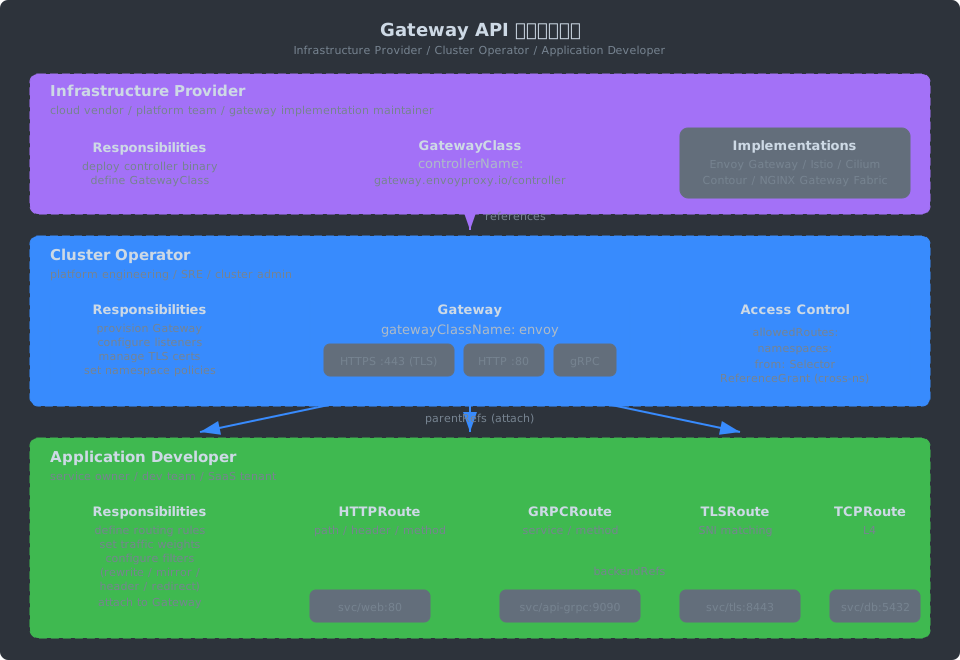
Infrastructure Provider(基础设施提供者)
负责部署 Gateway 控制器并创建
GatewayClass。GatewayClass
是集群级别资源,声明集群中可用的网关实现,类比 StorageClass
之于 PVC。
apiVersion: gateway.networking.k8s.io/v1
kind: GatewayClass
metadata:
  name: envoy
spec:
  controllerName: gateway.envoyproxy.io/gatewayclass-controller
Cluster Operator(集群运维)
负责创建 Gateway
资源,代表一个实际的数据面实例——监听端口、TLS 证书、Route
绑定策略。
apiVersion: gateway.networking.k8s.io/v1
kind: Gateway
metadata:
  name: main-gateway
  namespace: infra-gw
spec:
  gatewayClassName: envoy
  listeners:
  - name: https
    protocol: HTTPS
    port: 443
    tls:
      mode: Terminate
      certificateRefs:
      - name: wildcard-cert
        namespace: cert-store
    allowedRoutes:
      namespaces:
        from: Selector
        selector:
          matchLabels:
            gateway-access: "true"
allowedRoutes.namespaces 控制哪些 namespace
的 Route
可以绑定——运维决定”谁可以接入”。tls.certificateRefs
可跨 namespace 引用证书(需配合 ReferenceGrant)。
Application Developer(应用开发者)
在自己的 namespace 中创建 Route 资源,通过
parentRefs 绑定到 Gateway:
apiVersion: gateway.networking.k8s.io/v1
kind: HTTPRoute
metadata:
  name: shop-route
  namespace: app-team-a
spec:
  parentRefs:
  - name: main-gateway
    namespace: infra-gw
    sectionName: https
  hostnames:
  - "shop.example.com"
  rules:
  - matches:
    - path:
        type: PathPrefix
        value: /api
    backendRefs:
    - name: shop-api
      port: 8080
开发者无需关心网关实现细节或 TLS 配置。平台团队可通过 RBAC 限制只有运维角色才能创建 Gateway,开发者只能创建 Route。
三、核心资源拆解
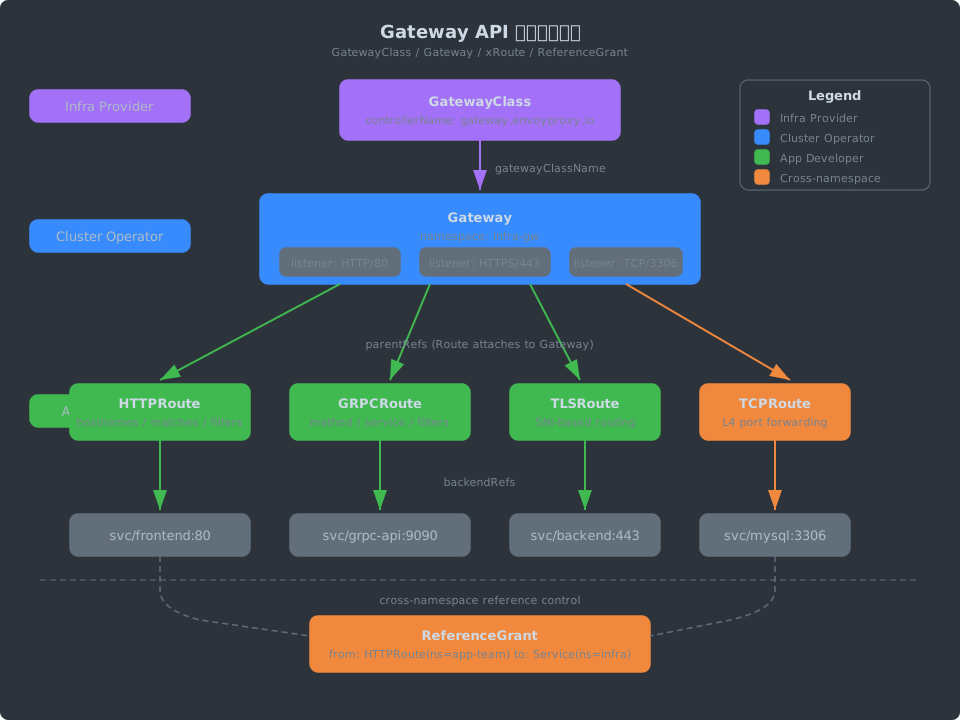
Gateway API 由一组 CRD 组成,按层级从上到下:GatewayClass、Gateway、xRoute、ReferenceGrant。
GatewayClass
集群作用域资源,核心字段 controllerName
声明负责管理的控制器。parametersRef
可选,允许引用实现特定配置对象。一个集群中可同时存在多个
GatewayClass。
apiVersion: gateway.networking.k8s.io/v1
kind: GatewayClass
metadata:
  name: istio
spec:
  controllerName: istio.io/gateway-controller
  parametersRef:
    group: config.istio.io
    kind: IstioOperator
    name: default
Gateway
Namespace 级别资源,代表实际数据面实例,核心是
listeners 数组。控制器回写 status
报告就绪状态:Programmed: True
表示配置已下发到数据面,Accepted: True
表示配置被接受。
HTTPRoute
最常用的路由资源,支持 Header 匹配、权重路由等在 Ingress 中需要 annotation 的功能。支持的匹配条件:
| 字段 | 类型 | 说明 |
|---|---|---|
path |
Exact / PathPrefix / RegularExpression | 路径匹配 |
headers |
Exact / RegularExpression | Header 匹配 |
queryParams |
Exact / RegularExpression | 查询参数匹配 |
method |
GET / POST / PUT / DELETE … | HTTP 方法匹配 |
示例——Header 匹配 + 权重分流:
rules:
- matches:
  - path:
      type: PathPrefix
      value: /v2
    headers:
    - name: x-canary
      value: "true"
  backendRefs:
  - name: api-v2
    port: 8080
- matches:
  - path:
      type: PathPrefix
      value: /v2
  backendRefs:
  - name: api-v1
    port: 8080
    weight: 90
  - name: api-v2
    port: 8080
    weight: 10
GRPCRoute
为 gRPC 流量提供原生路由支持(v1.2 Standard channel),按 service/method 匹配:
apiVersion: gateway.networking.k8s.io/v1
kind: GRPCRoute
metadata:
  name: grpc-route
  namespace: app
spec:
  parentRefs:
  - name: main-gateway
    namespace: infra-gw
  rules:
  - matches:
    - method:
        service: com.example.UserService
        method: GetUser
    backendRefs:
    - name: user-service
      port: 9090
TLSRoute 与 TCPRoute
TLSRoute 用于 TLS passthrough(基于 SNI 路由),TCPRoute 用于纯四层转发,两者目前在 Experimental channel:
apiVersion: gateway.networking.k8s.io/v1alpha2
kind: TLSRoute
metadata:
  name: tls-passthrough
spec:
  parentRefs:
  - name: main-gateway
    sectionName: tls-passthrough
  hostnames:
  - "secure.example.com"
  rules:
  - backendRefs:
    - name: secure-backend
      port: 8443
---
apiVersion: gateway.networking.k8s.io/v1alpha2
kind: TCPRoute
metadata:
  name: mysql-route
spec:
  parentRefs:
  - name: main-gateway
    sectionName: mysql
  rules:
  - backendRefs:
    - name: mysql-primary
      port: 3306
四、ReferenceGrant:跨 Namespace 的安全引用
Gateway API 默认禁止跨 namespace 引用——这是安全性设计。ReferenceGrant 提供显式授权:被引用方 namespace 的管理员声明”允许来自某 namespace 的某类资源引用本 namespace 中的某类资源”。
apiVersion: gateway.networking.k8s.io/v1beta1
kind: ReferenceGrant
metadata:
  name: allow-app-team-a
  namespace: backend-shared
spec:
  from:
  - group: gateway.networking.k8s.io
    kind: HTTPRoute
    namespace: app-team-a
  to:
  - group: ""
    kind: Service
同理可授权 Gateway 跨 namespace 引用 Secret(TLS
证书)。设计要点:授权由被引用方控制;from/to
可精确到 group、kind、namespace;ReferenceGrant
必须部署在被引用资源所在 namespace。
五、与 Ingress 的全面对比
| 维度 | Ingress | Gateway API |
|---|---|---|
| API 版本 | networking.k8s.io/v1(稳定) | gateway.networking.k8s.io/v1(稳定) |
| 角色模型 | 单一层级 | 三层:GatewayClass / Gateway / Route |
| HTTP 路由 | host + path | host + path + header + query + method |
| 权重路由 | annotation(不可移植) | 原生 backendRefs weight |
| gRPC | 不原生支持 | GRPCRoute(Standard) |
| TCP/UDP | 不支持 | TCPRoute / UDPRoute(Experimental) |
| TLS passthrough | annotation(不可移植) | TLSRoute(Experimental) |
| 跨 namespace | 不支持 | ReferenceGrant |
| 请求改写 | annotation(不可移植) | HTTPRoute filter(Standard) |
| 流量镜像 | annotation(不可移植) | HTTPRoute filter(Experimental) |
| 扩展机制 | annotation | Policy Attachment / filter / parametersRef |
| 可移植性 | 低(依赖 annotation) | 高(核心 spec 可移植) |
| 状态报告 | 简单 | 丰富(per-listener / per-route conditions) |
扩展机制对比
Ingress 的扩展完全依赖非类型化的 annotation,没有 schema 校验和版本控制。Gateway API 提供三种标准化扩展机制:
1. Filter:在 HTTPRoute rules 中内联,用于请求/响应改写。
rules:
- filters:
  - type: RequestHeaderModifier
    requestHeaderModifier:
      add:
      - name: x-request-id
        value: "generated-by-gateway"
  - type: URLRewrite
    urlRewrite:
      path:
        type: ReplacePrefixMatch
        replacePrefixMatch: /v2
2. Policy Attachment:通过
targetRef 将策略附加到 Gateway 或
Route,用于超时、重试、限流等。
apiVersion: gateway.envoyproxy.io/v1alpha1
kind: BackendTrafficPolicy
metadata:
  name: timeout-policy
spec:
  targetRef:
    group: gateway.networking.k8s.io
    kind: HTTPRoute
    name: shop-route
  timeout:
    http:
      connectionIdleTimeout: 60s
      requestTimeout: 15s
  retry:
    numRetries: 3
    retryOn:
    - gateway-error
    - connection-failure
3. parametersRef:GatewayClass 和 Gateway 可通过 parametersRef 引用实现特定配置对象。
六、高级流量管理
以下是生产中常见的高级流量管理场景。
金丝雀发布(Canary)
通过 backendRefs 的 weight 字段实现按比例分配,配合 CI/CD 逐步调整即可实现渐进式发布:
rules:
- backendRefs:
  - name: app-stable
    port: 8080
    weight: 95
  - name: app-canary
    port: 8080
    weight: 5
Header-based 路由
将特定 Header 的请求路由到指定后端,常用于内部测试或 A/B 实验:
rules:
- matches:
  - headers:
    - name: x-env
      value: staging
  backendRefs:
  - name: app-staging
    port: 8080
- matches:
  - path:
      type: PathPrefix
      value: /
  backendRefs:
  - name: app-production
    port: 8080
URL Rewrite
rules:
- matches:
  - path:
      type: PathPrefix
      value: /api/v1
  filters:
  - type: URLRewrite
    urlRewrite:
      path:
        type: ReplacePrefixMatch
        replacePrefixMatch: /v1
  backendRefs:
  - name: api-server
    port: 8080
客户端请求 /api/v1/users 会被改写为
/v1/users 后转发到
api-server。
Request Mirror
将生产流量副本发送到镜像后端(Experimental channel),响应会被丢弃:
filters:
- type: RequestMirror
  requestMirror:
    backendRef:
      name: app-shadow
      port: 8080
请求/响应 Header 修改
filters:
- type: RequestHeaderModifier
  requestHeaderModifier:
    set:
    - name: x-forwarded-proto
      value: https
    remove:
    - x-internal-token
超时与重试(Policy Attachment)
超时、重试、熔断通过 Policy Attachment 实现。以 Envoy Gateway 为例:
apiVersion: gateway.envoyproxy.io/v1alpha1
kind: BackendTrafficPolicy
metadata:
  name: resilience
  namespace: app
spec:
  targetRef:
    group: gateway.networking.k8s.io
    kind: HTTPRoute
    name: shop-route
  timeout:
    http:
      requestTimeout: 10s
  retry:
    numRetries: 3
    perRetry:
      timeout: 3s
    retryOn:
    - "5xx"
    - connect-failure
  circuitBreaker:
    maxConnections: 1024
    maxPendingRequests: 128
各实现有各自的 CRD,但 API 模式趋同。标准化仍在推进中(GEP-1731、GEP-1619)。
七、各实现的成熟度
合规性等级
| 通道 | 说明 | 对应资源 |
|---|---|---|
| Standard | GA 等效,所有实现必须支持 | GatewayClass、Gateway、HTTPRoute、GRPCRoute |
| Experimental | 可选,API 可能变更 | TLSRoute、TCPRoute、UDPRoute、RequestMirror |
| Implementation-specific | 各实现自行定义 | Policy Attachment CRD |
主流实现对比
| 实现 | 数据面 | Standard 合规 | 亮点 | 局限 |
|---|---|---|---|---|
| Envoy Gateway | Envoy Proxy | 完全 | 原生 Gateway API 设计;丰富 Policy Attachment | 较年轻,社区规模相对较小 |
| Istio | Envoy Proxy | 完全 | GAMMA 最成熟;服务网格一体化 | 部署复杂度较高 |
| Cilium | Envoy + eBPF | 完全 | eBPF 加速;与网络策略集成 | 部分 Experimental 特性依赖 Envoy 旁路 |
| Contour | Envoy Proxy | 完全 | 轻量级;HTTPProxy 可共存 | 扩展能力不如 Envoy Gateway 和 Istio |
| NGINX Gateway Fabric | NGINX | 完全 | NGINX 生态;性能成熟 | Experimental 特性支持较少 |
选型建议
- 已用 Istio 做服务网格:直接使用 Istio 的 Gateway API 实现。
- 纯入口网关(不需要网格):Envoy Gateway 从第一天就围绕 Gateway API 设计。
- Cilium 做 CNI:可利用 eBPF 加速,与网络策略无缝集成。
- 需要 NGINX 生态整合:NGINX Gateway Fabric 提供平滑过渡路径。
- 已有 Contour HTTPProxy 资源:支持 Gateway API 和 HTTPProxy 共存,可渐进迁移。
八、GAMMA:Gateway API for Mesh Management and Administration
Gateway API 最初面向南北向(ingress)流量。GAMMA 子项目将其资源模型扩展到东西向(service mesh),解决各网格实现各自定义 CRD 缺乏统一标准的问题。
GAMMA 的核心理念
在 GAMMA 模型中,HTTPRoute 的 parentRef
可指向 Service(东西向),描述”如何路由到这个 Service
的流量”:
apiVersion: gateway.networking.k8s.io/v1
kind: HTTPRoute
metadata:
  name: reviews-canary
  namespace: bookinfo
spec:
  parentRefs:
  - group: ""
    kind: Service
    name: reviews
  rules:
  - backendRefs:
    - name: reviews-v1
      port: 9080
      weight: 90
    - name: reviews-v2
      port: 9080
      weight: 10
到达 reviews 的流量 90% 转发到 v1、10%
转发到 v2——即网格内金丝雀发布。
GAMMA 与传统网格 API 的对比
| 场景 | 传统方式(VirtualService) | GAMMA 方式(HTTPRoute) |
|---|---|---|
| 金丝雀路由 | VirtualService + DestinationRule | HTTPRoute(parentRef=Service) |
| Header 路由 | VirtualService | HTTPRoute matches |
| 超时/重试 | VirtualService | Policy Attachment |
| 可移植性 | Istio 专有 | 跨网格可移植 |
Istio 从 1.22 开始将 Gateway API 作为推荐 API,计划逐步弃用 VirtualService/DestinationRule。
GAMMA 当前状态
GAMMA 在 v1.1 中进入 Experimental channel。支持情况:Istio 最完整(Service parentRef、流量分割、Header 路由);Linkerd 支持流量分割;Cilium 部分支持。长期目标是让开发者用同一套 HTTPRoute 定义南北向和东西向路由。
九、从 Ingress 迁移到 Gateway API 的实战路径
评估阶段
迁移前需回答三个问题:
- 当前 Ingress 用了哪些 annotation? 检查每个 annotation 在 Gateway API 中是否有原生替代。
kubectl get ingress -A -o jsonpath='{range .items[*]}{.metadata.namespace}/{.metadata.name}: {.metadata.annotations}{"\n"}{end}'- 是否有跨 namespace 引用需求? 如有,需规划 ReferenceGrant。
- 选择哪个 Gateway API 实现? 参考第七节选型建议。
共存阶段
大多数实现可与现有 Ingress 控制器共存。推荐策略:部署 Gateway API 实现并创建 GatewayClass 和 Gateway;选择非关键应用创建 HTTPRoute 替代 Ingress;验证后逐步扩大范围;全部迁移后下线旧控制器。
资源映射
以带 rewrite 的 Ingress 为例:
# Ingress
apiVersion: networking.k8s.io/v1
kind: Ingress
metadata:
  name: simple
  annotations:
    nginx.ingress.kubernetes.io/rewrite-target: /
spec:
  ingressClassName: nginx
  rules:
  - host: app.example.com
    http:
      paths:
      - path: /old-api
        pathType: Prefix
        backend:
          service:
            name: api-service
            port:
              number: 80
# 等效 HTTPRoute
apiVersion: gateway.networking.k8s.io/v1
kind: HTTPRoute
metadata:
name: simple
spec:
parentRefs:
- name: main-gateway
namespace: infra-gw
hostnames:
- "app.example.com"
rules:
- matches:
- path:
type: PathPrefix
value: /old-api
filters:
- type: URLRewrite
urlRewrite:
path:
type: ReplacePrefixMatch
replacePrefixMatch: /
backendRefs:
- name: api-service
port: 80关键区别:在 Gateway API 中,TLS 终止由 Cluster Operator 在 Gateway 上配置,App Developer 的 HTTPRoute 只关心路由逻辑。
自动化迁移工具
社区提供 ingress2gateway 工具:
go install github.com/kubernetes-sigs/ingress2gateway@latest
ingress2gateway print --all-resources
ingress2gateway print --providers=ingress-nginx
支持 nginx、istio、kong 等主流控制器的 annotation 转换,复杂自定义 annotation 仍需手动处理。
十、实验:用 Envoy Gateway 实现金丝雀发布
环境准备
cat <<EOF | kind create cluster --config=-
kind: Cluster
apiVersion: kind.x-k8s.io/v1alpha4
nodes:
- role: control-plane
- role: worker
- role: worker
EOF

kubectl apply -f https://github.com/kubernetes-sigs/gateway-api/releases/download/v1.2.0/standard-install.yaml

helm install eg oci://docker.io/envoyproxy/gateway-helm \
  --version v1.2.0 -n envoy-gateway-system --create-namespace

kubectl wait --timeout=5m -n envoy-gateway-system \
  deployment/envoy-gateway --for=condition=Available
部署应用
部署 stable(v1)和 canary(v2)两个版本,结构相同仅 version 标签和返回文本不同:
apiVersion: apps/v1
kind: Deployment
metadata:
  name: app-stable
  namespace: demo
spec:
  replicas: 2
  selector:
    matchLabels: {app: demo, version: stable}
  template:
    metadata:
      labels: {app: demo, version: stable}
    spec:
      containers:
      - name: app
        image: hashicorp/http-echo:0.2.3
        args: ["-text=stable-v1"]
        ports: [{containerPort: 5678}]
---
apiVersion: v1
kind: Service
metadata:
  name: app-stable
  namespace: demo
spec:
  selector: {app: demo, version: stable}
  ports: [{port: 8080, targetPort: 5678}]
---
apiVersion: apps/v1
kind: Deployment
metadata:
  name: app-canary
  namespace: demo
spec:
  replicas: 1
  selector:
    matchLabels: {app: demo, version: canary}
  template:
    metadata:
      labels: {app: demo, version: canary}
    spec:
      containers:
      - name: app
        image: hashicorp/http-echo:0.2.3
        args: ["-text=canary-v2"]
        ports: [{containerPort: 5678}]
---
apiVersion: v1
kind: Service
metadata:
  name: app-canary
  namespace: demo
spec:
  selector: {app: demo, version: canary}
  ports: [{port: 8080, targetPort: 5678}]
kubectl create namespace demo && kubectl apply -f app.yaml创建 Gateway
Envoy Gateway 安装后会自动创建 GatewayClass,只需创建 Gateway:
apiVersion: gateway.networking.k8s.io/v1
kind: Gateway
metadata:
  name: demo-gateway
  namespace: demo
spec:
  gatewayClassName: eg
  listeners:
  - name: http
    protocol: HTTP
    port: 80
    allowedRoutes:
      namespaces:
        from: Same
kubectl apply -f gateway.yaml金丝雀发布:权重路由 + Header 路由
配置 10% 金丝雀流量,同时支持通过 Header 精准控制:
apiVersion: gateway.networking.k8s.io/v1
kind: HTTPRoute
metadata:
  name: demo-route
  namespace: demo
spec:
  parentRefs:
  - name: demo-gateway
  hostnames:
  - "demo.example.com"
  rules:
  - matches:
    - path:
        type: PathPrefix
        value: /
      headers:
      - name: x-canary
        value: "true"
    backendRefs:
    - name: app-canary
      port: 8080
  - matches:
    - path:
        type: PathPrefix
        value: /
    backendRefs:
    - name: app-stable
      port: 8080
      weight: 90
    - name: app-canary
      port: 8080
      weight: 10
kubectl apply -f route-canary.yaml
GW_IP=$(kubectl get gateway -n demo demo-gateway \
-o jsonpath='{.status.addresses[0].value}')
# 普通请求:按 90/10 权重路由
for i in $(seq 1 100); do
curl -s -H "Host: demo.example.com" http://${GW_IP}/
done | sort | uniq -c | sort -rn
# 带 canary header:100% 走 canary
curl -s -H "Host: demo.example.com" -H "x-canary: true" http://${GW_IP}/全量切换与清理
确认 canary 稳定后,将 backendRefs 改为仅指向
app-canary 即完成全量切换。通过
kubectl get httproute -n demo demo-route -o yaml
检查 status:Accepted: True 表示 Gateway
接受路由,ResolvedRefs: True 表示 backendRef
解析成功。
kubectl delete namespace demo
kind delete cluster
十一、总结
Gateway API 解决了 Ingress 在角色模型、表达能力、可移植性上的根本缺陷,是一次彻底的重新设计。
核心要点:
- 角色分离:GatewayClass / Gateway / xRoute 三层资源对应三种组织角色,通过 RBAC 实现职责隔离。
- 核心资源:涵盖 HTTPRoute、GRPCRoute、TLSRoute、TCPRoute,以及跨 namespace 安全引用的 ReferenceGrant。
- 高级流量管理:金丝雀、Header 路由、URL 改写、流量镜像等能力是原生 spec,不依赖 annotation。
- GAMMA:将 Gateway API 从南北向扩展到东西向,为服务网格提供统一路由 API。
- 迁移路径:评估 annotation 依赖、选择实现、共存过渡、逐步切换。
对于新项目建议直接采用 Gateway API;存量项目制定迁移计划逐步推进。Ingress 不会立即消失,但进入维护模式已成定局。
附录 A:Gateway API 资源速查
| 资源 | 作用域 | API Group | 通道 | 管理者 |
|---|---|---|---|---|
| GatewayClass | Cluster | gateway.networking.k8s.io | Standard | Infra Provider |
| Gateway | Namespace | gateway.networking.k8s.io | Standard | Cluster Operator |
| HTTPRoute | Namespace | gateway.networking.k8s.io | Standard | App Developer |
| GRPCRoute | Namespace | gateway.networking.k8s.io | Standard | App Developer |
| TLSRoute | Namespace | gateway.networking.k8s.io | Experimental | App Developer |
| TCPRoute | Namespace | gateway.networking.k8s.io | Experimental | App Developer |
| UDPRoute | Namespace | gateway.networking.k8s.io | Experimental | App Developer |
| ReferenceGrant | Namespace | gateway.networking.k8s.io | Standard | Namespace Admin |
附录 B:版本演进
| 版本 | 日期 | 关键变更 |
|---|---|---|
| v0.1.0 | 2020-06 | 初始发布,基本资源模型 |
| v0.5.0 | 2022-07 | HTTPRoute Beta,ReferenceGrant 引入 |
| v1.0.0 | 2023-10 | HTTPRoute、Gateway、GatewayClass GA |
| v1.1.0 | 2024-05 | GRPCRoute Standard;GAMMA Experimental |
| v1.2.0 | 2024-10 | GRPCRoute Standard 完善;BackendLBPolicy 引入 |
附录 C:推荐阅读
系列导航 - 上一篇:Ingress 控制器 - 返回目录:Kubernetes 网络深度系列 - 下一篇:Network Policy - 相关:Service 进阶 | Cilium
读完这篇,下一步读什么
优先读同系列或同问题的下一篇,把单篇消费变成主题集群。
【Kubernetes 网络深度系列】Ingress 控制器:从 Nginx 到 Envoy,七层流量入口全解
主流 Ingress Controller 架构对比、热更新机制、TLS 终止,以及为什么 Ingress API 注定被替代
【Kubernetes 网络深度系列】Kubernetes 网络的未来:趋势、挑战与架构师指南
四大趋势、AI 工作负载挑战、架构师决策矩阵,以及 K8s 网络的知识图谱
【Envoy Gateway】南北向全景:缺口、五轴坐标系与 16 篇路线
相对 Gateway API 产品教程、Cilium 南北向边界、Envoy 消费侧与 istiod 翻译,钉清 Envoy Gateway v1.9.0 控制面内核缺口;定义附着/status、IR、xDS、Envoy 数据面、入口之后东西向五条轴,给出 16 篇阅读路线。
【Envoy Gateway】HTTPRoute / GRPCRoute:匹配进入 RDS,阴影要靠 RouteRulesOverlap
钉 HTTPRoute/GRPCRoute 的附着、hostname、matches/filters/backendRefs 如何进入 RDS;对照 Gateway API v1.6.1 匹配优先级,以及 v1.9 RouteRulesOverlap 对同 listener 相同匹配的警告。